

Quick answer
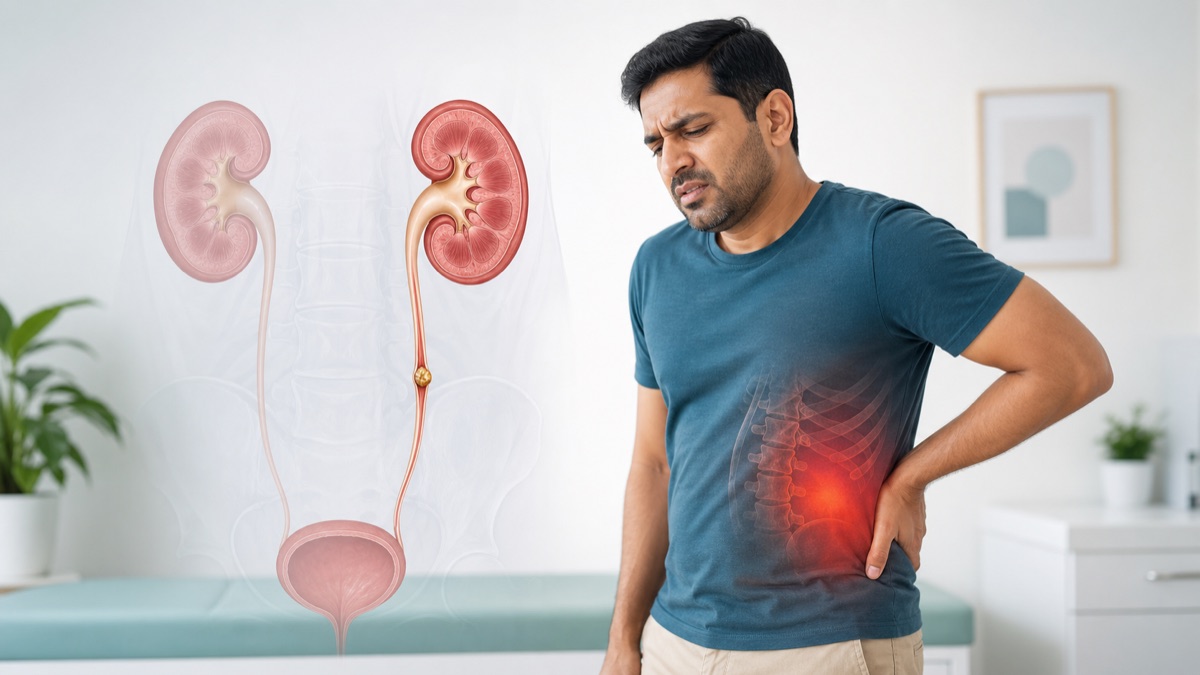
Kidney stone pain often starts sharply in the side or back below the ribs and may move towards the lower abdomen or groin. It can come in waves and may occur with nausea, blood in urine, urinary urgency or burning. Severe pain, fever or chills, repeated vomiting, very little urine, or a report showing obstruction needs prompt medical assessment.
A pain labelled “kidney stone” can mean very different things depending on where the stone is, how large it is, whether urine is draining freely and whether infection is present. Pain intensity alone does not answer those questions.
The useful starting point is a recent report and a clear symptom timeline. This guide explains how the pain can travel, which tests doctors use, what details change the plan and how Dr. Akshata structures a recurrence-focused consultation after immediate safety has been addressed.
Where kidney stone pain is felt
Pain often begins in the flank: the side of the back between the lower ribs and hip. As a stone moves from the kidney into the ureter, pain may shift towards the lower abdomen or groin. The pain can rise and fall in waves because the ureter is trying to move urine past the stone. Location is a clue, not a diagnosis; gallbladder, bowel, spine, urinary infection and gynaecological problems can produce overlapping pain.
Four places patients commonly describe
The route can change as a stone moves through the urinary tract.
Side or back
Sharp pain below the ribs, often more noticeable on one side.
Lower abdomen
Pain may move forward or lower as the stone enters the ureter.
Groin
A lower ureteric stone may cause pain that radiates towards the groin.
Urinary tract
Burning, urgency, frequency or blood in urine can appear with pain.
Symptoms that can occur with kidney stones
Some small stones cause no symptoms until they move. A symptomatic stone can produce more than pain, and the combination helps determine how urgently it should be assessed.
- Pink, red or brown urine, or blood detected on a urine test
- A frequent or urgent need to urinate
- Pain or burning while urinating
- Nausea or vomiting during a pain wave
- Cloudy or bad-smelling urine
- Passing only a small amount of urine
- Fever or chills, which raise concern about infection
What stone size and location actually tell you
Size matters, but it is not the only decision point. A small stone in a difficult position can cause obstruction, while a stone sitting quietly in the kidney may cause few symptoms. Doctors also consider the stone’s location, urinary blockage, kidney swelling, infection, kidney function, pain control and whether symptoms are improving. That is why a millimetre number should never be interpreted on its own.
- Kidney: a stone may remain quiet or cause flank discomfort
- Ureter: movement or blockage can produce severe wave-like pain
- Near the bladder: urgency, frequency and groin pain may become more prominent
- Obstruction or hydronephrosis: needs clinician-led assessment even if pain temporarily settles
Which tests and reports help
Medical history, examination, urine and blood tests, and imaging are used to diagnose kidney stones. The exact test depends on the situation. Ultrasound can identify many stones and kidney swelling without radiation, while CT can show stone size, location and obstruction in greater detail. A clinician should decide what is appropriate.
Four pieces that change the consultation
Bring the report itself, not only a remembered stone size.
Ultrasound or CT
Stone size, exact location, number of stones and any swelling or blockage.
Urine test
Blood, crystals, white cells and bacteria can change the next step.
Blood tests
Kidney function and selected mineral levels may be relevant.
Stone analysis
If a stone is retrieved, its type can guide prevention advice.
Emergency signs: when not to wait
A blocked urinary tract with infection can become dangerous. Seek prompt medical care when pain is severe or accompanied by warning signs. Do not wait for a routine appointment or try to manage the episode only through online advice.
- Fever, chills or feeling shivery with urinary pain
- Severe pain that cannot be controlled
- Repeated vomiting or inability to keep fluids down
- Inability to urinate or passing very little urine
- Known obstruction, kidney swelling or a single functioning kidney
- Pregnancy, significant kidney disease or marked weakness with stone symptoms
Preparing for a consultation
Bring your reports and a list of current medicines. An examination may be needed before advice can be given.
How current care and recurrence support fit together
Medical treatment is chosen according to stone size, location, type and complications. Some small stones may pass with clinician-guided fluids, pain relief and monitoring. Stones causing blockage, uncontrolled pain or other complications may need a urologist and procedures such as lithotripsy or ureteroscopy. After the acute episode is settled, prevention becomes the longer conversation.
The plan changes with the stage
Acute pain care and recurrence review solve different problems.
Confirm
Identify size, location, obstruction, infection and kidney function.
Stabilise
Follow medical advice for pain, fluids, infection or a required procedure.
Review tendency
Look at previous stones, hydration, diet, heat exposure and urine findings.
Track
Use symptoms and repeat reports where advised, not guesswork.
Practical steps that may reduce recurrence risk
Prevention should match the stone type and the patient’s health. Drinking enough fluid to avoid concentrated urine is central for many people, but anyone with a fluid restriction needs individual advice. Broad food bans are rarely useful without knowing the stone pattern.
- Spread water intake through the day and increase it appropriately in hot weather or with heavy sweating
- Reduce excess salt rather than relying on a “stone-removing” drink
- Ask whether a stone analysis or 24-hour urine assessment is needed after recurrent episodes
- Do not stop normal dietary calcium or remove many healthy foods without clinician or dietitian advice
- Keep reports, dates and stone details together for future comparison
Related Pages
Continue with related treatment and support pages from Dr. Akshata.