



Nasal polyps are soft, noncancerous growths linked with long-standing inflammation inside the nose and sinuses. They may cause constant blockage, mouth breathing, reduced smell, snoring and repeated sinus trouble. Dr. Akshata first checks whether polyps are confirmed, whether symptoms are on one or both sides, and whether an ENT review, endoscopy or CT report is available before planning homeopathy and follow-up.
Is this Nasal Polyps consultation right for me?
This guide is for patients with confirmed nasal polyps, or persistent blockage and smell loss that may need ENT confirmation, who want a detailed consultation and measurable follow-up.
What are nasal polyps?
Nasal polyps are soft, painless, noncancerous growths that arise from the lining of the nose or sinuses. Small polyps may cause few symptoms; larger or multiple polyps can narrow the nasal airway and interfere with sinus drainage.
They commonly occur with chronic rhinosinusitis and may be associated with asthma, allergy or aspirin sensitivity. A blocked nose alone does not confirm polyps because allergy, a deviated septum and other conditions can feel similar.
Diagnosis is usually confirmed by an ENT examination or nasal endoscopy. CT imaging may be advised when the extent of sinus disease, surgery planning or another cause needs assessment.
How nasal polyps affect daily life
The consultation separates the growth itself from the symptoms and linked airway pattern.
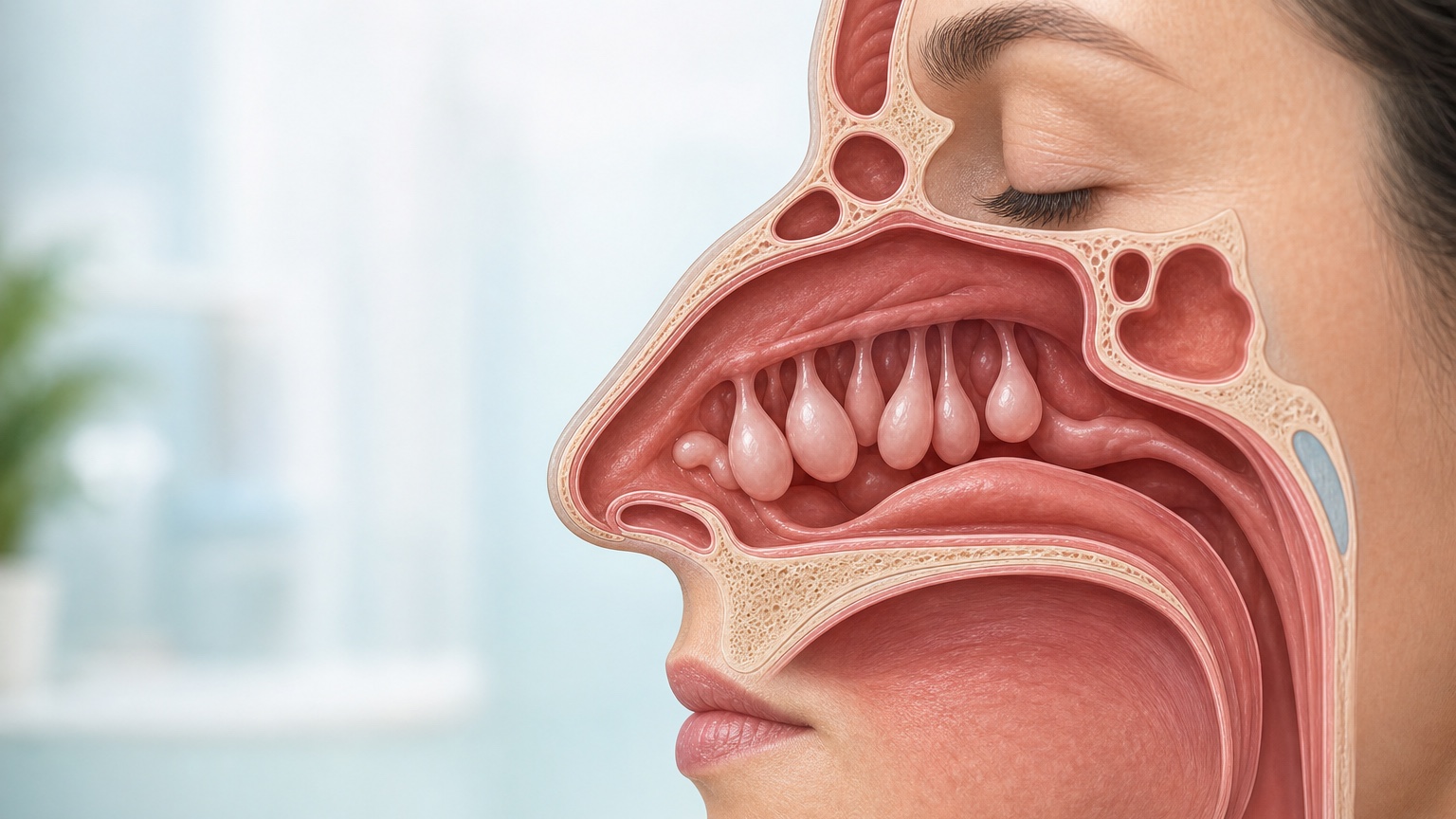
Polyps can block airflow, smell and sinus drainage
This illustration shows why the location and extent of polyps matter. Dr. Akshata compares nasal blockage, smell, discharge, sleep, asthma or allergy history, ENT findings and current treatment before setting follow-up goals.
Common Symptoms of Nasal Polyps
- ✓Blocked or stuffy nose lasting for weeks
- ✓Reduced or absent sense of smell
- ✓Reduced taste because smell is affected
- ✓Runny nose or post-nasal drip
- ✓Facial pressure, sinus heaviness or headache
- ✓Snoring, mouth breathing or dry mouth on waking
- ✓Repeated sinus infections or thick discharge
- ✓Cough, wheeze or worsening asthma symptoms
Details that change the nasal polyps plan
These details help distinguish routine follow-up from a situation needing prompt ENT reassessment.
Why do nasal polyps develop?
The exact reason differs between patients, but persistent inflammation in the nose and sinuses is the central pattern.
- 01 Chronic rhinosinusitis: Long-standing inflammation can cause the sinus lining to swell and form polyps.
- 02 Asthma and airway inflammation: Nasal polyps are more common when upper- and lower-airway inflammation occur together.
- 03 Aspirin sensitivity: Some patients have nasal polyps, asthma and reactions to aspirin or similar painkillers.
- 04 Allergy and irritants: Dust, smoke, pollution or allergy can add to nasal inflammation, even when allergy is not the only cause.
- 05 Individual immune tendency: Family history and differences in local immune response may influence recurrence.
- 06 Previous sinus disease: Polyps can recur after medicines or surgery, so long-term monitoring matters.
Preparing for a consultation
Bring your reports and a list of current medicines. An examination may be needed before advice can be given.
01 Your symptom history
Note when symptoms began, what changed, and how they affect sleep, work or daily activities.
02 Reports and medicines
Bring existing diagnoses, test results and the names of medicines and supplements you use. Do not stop prescribed treatment to attend a consultation.
03 Examination and referral
Ask whether you need an in-person examination, further tests or a referral. Urgent symptoms need timely medical care, not an online appointment.
How nasal polyps symptoms are tracked
The same markers are recorded at baseline and follow-up so change is based on a pattern, not one unusually good or bad day.
Nasal Obstruction
0-10 blockage score and one-sided versus bilateral pattern
Sense of Smell
Normal, reduced, absent or fluctuating week to week
Sleep + Mouth Breathing
Snoring, dry mouth and disturbed nights
Sinus-Flare Days
Pressure, discharge, infection and headache days
Medicine Use
Sprays, rinses, steroids and other prescribed treatment
ENT Evidence
Endoscopy or imaging when objective reassessment is due
Pune Areas We Serve Nasal Polyps consultation from nearby areas Open local area links
Nasal Polyps consultation from nearby areas
Patients from Lohegaon, Dhanori, Viman Nagar, Kharadi, Wagholi, Vishrantwadi and Yerwada can visit the clinic with ENT reports or start with an online report review.
Nasal Polyps Care Map at Dr. Akshata's Clinic
The plan keeps diagnosis, current ENT treatment, individualized case-taking and measurable follow-up connected.
When to Seek Medical Attention
- Persistent one-sided blockage, especially with bleeding or a blood-stained discharge
- Double vision, reduced vision, eye swelling or severe pain around the eyes
- A rapidly worsening headache, swollen forehead, stiff neck or confusion
- Severe wheeze, breathing difficulty or a strong reaction after aspirin or another painkiller
- High fever, facial swelling or symptoms that worsen quickly
Keep prescribed medicines, urgent care and specialist follow-up unchanged unless the treating clinician advises otherwise.
Nasal polyps care: how each option fits
The safest plan depends on obstruction, smell, asthma, recurrence and ENT findings. Different forms of care can be coordinated rather than treated as rivals.
| Situation | Conventional / specialist care | Homeopathy at Dr. Akshata's clinic | Decision point |
|---|---|---|---|
| Confirmed bilateral polyps with chronic congestion | ENT assessment, saline irrigation and prescribed nasal corticosteroid; other treatment according to severity | Individual case review of blockage, smell, discharge, sleep and recurrence while current care is documented | Set symptom goals and keep planned ENT follow-up |
| Persistent smell loss or major obstruction | Endoscopy or CT assessment; medical treatment and surgery may be discussed | Track smell and airflow without assuming symptom change proves polyp shrinkage | Use objective ENT reassessment when due |
| Symptoms return after surgery | ENT review for recurrent inflammation, spray technique and further treatment options | Map recurrence timing, asthma, allergy, sleep and full symptom pattern | Coordinate long-term recurrence monitoring |
| Asthma with aspirin sensitivity | Respiratory/allergy assessment and a clear medicine-safety plan | Record airway symptoms and triggers without changing inhalers or emergency plans | Airway safety and specialist care remain central |
| One-sided mass, bleeding or eye symptoms | Prompt ENT investigation to exclude another cause | Routine consultation should not delay investigation | ENT assessment first |
How Dr. Akshata Structures the Consultation for Nasal Polyps
Dr. Akshata plans homeopathy after reviewing the confirmed diagnosis, ENT reports, current treatment, obstruction, smell, discharge, sleep, asthma or allergy history and the measures that will be compared at follow-up.
Nasal Pattern
Side, severity, discharge and smell changes are mapped.
Whole Airway
Asthma, wheeze, allergy and aspirin sensitivity are reviewed.
Current Treatment
Sprays, rinses, steroids, surgery and ENT advice are documented.
Measured Review
The same symptom and medicine markers are compared over time.
What to Expect During Treatment
Bring an ENT prescription, nasal-endoscopy report, CT scan, surgery details and current spray or inhaler names if available. The first consultation also covers smell, sleep, sinus episodes, asthma, allergy and medicine reactions.
Follow-up timing depends on symptom severity and current ENT plan. Nasal blockage, smell, mouth breathing, sleep, sinus flares and medicine use are compared; physical polyp change requires objective ENT assessment.
Medicine safety
A website cannot select a medicine, potency or dose for you. Tell your treating clinician about every product you use. Homeopathic products are not a substitute for indicated medical treatment, vaccination or emergency care.
Is blocked nose or reduced smell affecting your day?
Book a nasal polyps consultation with Dr. Akshata in Lohegaon, Pune or online. Bring ENT reports and the names of every nasal spray, inhaler and medicine you currently use.
Diet & Lifestyle Guidance for Nasal Polyps
Daily care focuses on correct prescribed-treatment use, safer nasal hygiene and reducing irritants that worsen inflammation.
✓ Helpful Habits
- Use prescribed sprays with the technique shown by your clinician
- Use only sterile, distilled or properly boiled and cooled water for nasal rinsing
- Track smell, sleep and blockage each week
- Control asthma and allergy according to your treatment plan
- Carry ENT reports and a current medicine list
✗ Habits to Reduce
- Stop nasal steroids or inhalers without the prescribing clinician
- Use tap water directly for nasal irrigation
- Overuse decongestant drops
- Ignore one-sided bleeding or eye symptoms
- Assume every blocked nose is a polyp
Trusted Sources Used for This Guide
This page uses reputable medical references for symptoms, diagnosis, safety notes, and patient education.
Common Patient Questions Nasal Polyps Patient Questions About Care Open quick consultation answers
Nasal Polyps Patient Questions About Care
Short answers for distinct questions about diagnosis, reports, smell, recurrence and consultation planning.
Does every constantly blocked nose mean nasal polyps?
No. Allergy, sinus inflammation, a deviated septum, swollen turbinates and other conditions can cause similar blockage. ENT examination confirms the cause.
Which reports should I bring for a nasal polyps consultation?
Bring nasal-endoscopy findings, CT reports, prior surgery notes, ENT prescriptions and the names of nasal sprays, inhalers and other medicines.
Can the sense of smell improve?
Smell can fluctuate with inflammation and obstruction. The chance and timing of improvement depend on severity, duration and response to appropriate care.
Why can nasal polyps return after surgery?
Surgery removes obstructing tissue, but the underlying inflammatory tendency can continue. Long-term ENT follow-up and prescribed aftercare reduce avoidable recurrence risk.
Can I take an online consultation for nasal polyps?
Yes. Online consultation can review symptoms, reports and current treatment, but a physical ENT examination or endoscopy may still be required.