

Quick answer
Dr. Akshata first checks whether the scalp is dry, oily, itchy, infected, psoriasis-like, eczema-like or product-triggered. She records the flare pattern, products used and hair shedding; severe redness, pus, patchy hair loss or ringworm-like patches need medical review.
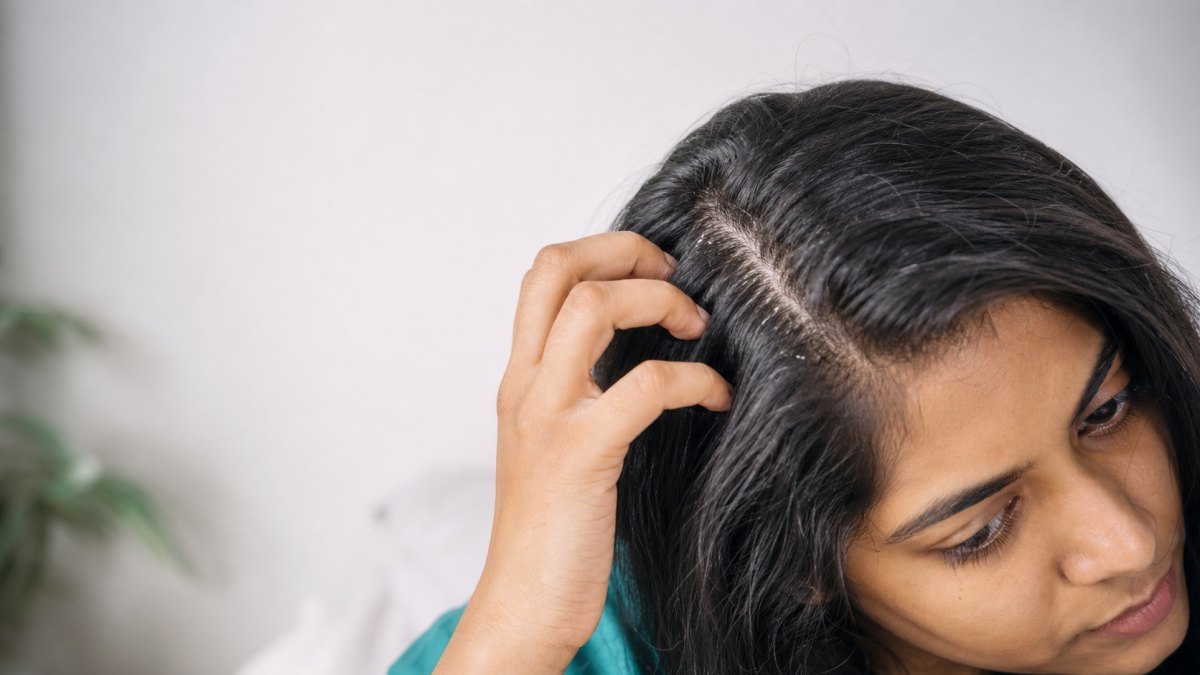
Scalp flaking can be dry or greasy and may occur with itching, redness or hair shedding. Persistent or worsening symptoms need assessment of the cause.
Simple flaking, seborrhoeic dermatitis, psoriasis, eczema, fungal infection and product irritation can look similar. Treatment depends on the diagnosis.
Scalp Patterns to Discuss
Flake appearance and associated symptoms help a clinician decide what needs examination. The same shampoo is not suitable for every cause.
Dandruff pattern map
Common Causes of Dandruff and Itchy Scalp
NHS describes dandruff as white or grey flakes of skin on the scalp and hair. It may be linked with seborrhoeic dermatitis, eczema, psoriasis, fungal infection or scalp sensitivity. That is why a recurring case needs more than a cosmetic answer.
Seborrhoeic dermatitis
Oily, itchy, scaly patches on scalp, eyebrows, nose sides, ears or beard area.
Dry scalp
Small white flakes with tightness, often after frequent washing or harsh products.
Product reaction
Hair dye, styling gel, shampoo, oil or serum can irritate sensitive scalp.
Scalp psoriasis
Thicker scales, redness, bleeding after scratching or plaques beyond the hairline.
Fungal infection
Patchy hair loss, broken hair, scaling or painful areas need medical care.
Stress and sleep
Many patients notice flares before exams, deadlines, travel or poor sleep.
Why shampoos fail repeatedly
Anti-dandruff shampoo may reduce flakes, but if the deeper pattern is stress-linked, seborrhoeic, allergic, fungal, psoriasis-like or hormonally connected, symptoms often return. The goal is not only “flake removal” but reducing recurrence tendency.
Dr. Akshata's Clinical Perspective
Note whether itching changes after sweating, oiling or shampooing, and whether it occurs at particular times. Bring the names of products you have used.
A clinician may also check whether flakes are dry or greasy, whether there is redness, whether the face has similar scaling, whether there are psoriasis patches elsewhere, whether hair fall started before or after dandruff, and whether the patient has used steroid lotions, strong anti-dandruff shampoos or repeated oils.
Progress should be recorded with the same measures at each follow-up: scalp areas affected, itch score, visible flaking, redness, wash routine, product use and shedding. With consent, standardized photographs can help distinguish true change from day-to-day variation.
Medicine safety
A website cannot choose a medicine, potency or dose for you. Share all medicines and supplements with your treating clinician. Homeopathic products must not replace indicated medical treatment or delay diagnosis.
Scalp Care Questions
Ask your treating clinician which products and washing routine suit the diagnosis. Avoid changing several products at once when irritation is present.
- Do not over-oil an oily scalp: heavy oiling can worsen stickiness in some patients.
- Use mild shampoo correctly: washing frequency depends on oiliness, sweat, dust and product use.
- Avoid scratching: scratching increases inflammation and can worsen hair shedding.
- Reduce product overload: gels, serums, sprays and hair dyes can irritate sensitive scalp.
- Track triggers: stress, late nights, helmets, sweating, winter, travel and diet changes matter.
Dandruff keeps returning after shampoo?
Book a scalp and hair consultation with Dr. Akshata in Lohegaon, Pune or online. Share photos, shampoo history, oiling habit and hair fall timeline.
When Dandruff and Hair Fall Happen Together
Many patients ask whether dandruff causes hair fall. Mild flakes may not cause permanent hair loss. But severe itching, scratching, scalp inflammation, infection, psoriasis, seborrhoeic dermatitis, PCOS, thyroid imbalance, low iron, B12 deficiency or stress can all increase shedding.
Dandruff and hair shedding can need assessment together. A clinician may ask which started first, whether shedding increases during flares, whether hair density is reducing, whether there are patches, and whether reports are needed.
When to consult a doctor soon
- Patchy hair loss, broken hair or ring-shaped scaly patches
- Pus, pain, swelling, bleeding or severe redness on scalp
- Thick plaques, bleeding after scratching or psoriasis elsewhere
- Dandruff with rapid hair thinning, fever or swollen glands
- Symptoms not improving despite correct shampoo use
References & Sources
- NHS. Dandruff. NHS →
- NHS. Ketoconazole information for dandruff and seborrhoeic dermatitis. NHS →
- Patient.info. Seborrhoeic dermatitis overview. Patient.info →
- National Eczema Society. Seborrhoeic dermatitis in adults. National Eczema Society →