

Quick answer
There is no one best oil for hair growth in every patient. If the hair shaft is dry or breakage-prone, coconut oil is often the most practical first option because it can reduce wash-related damage. But if the scalp is oily, itchy, dandruff-prone or acne-prone, frequent scalp oiling may worsen the problem. Oiling does not replace checking causes like stress, thyroid imbalance, PCOS, low iron, illness or hereditary thinning.
Many patients ask me for the “best hair oil” before we have understood why the hair is falling. Oil can improve softness, reduce friction and make the hair look healthier, but it does not treat every cause of hair fall. A patient with dandruff, scalp acne, postpartum shedding, thyroid imbalance or widening parting often needs a different plan from someone whose main issue is dry, breakage-prone hair.
In clinic, I decide first whether the problem is hair shaft damage, scalp inflammation, true thinning or temporary shedding. That is why the right oil depends more on scalp type and hair pattern than on trends. Used correctly, oil can support routine care. Used heavily on the wrong scalp, it can increase itching, flakes or tiny bumps.
What oil can and cannot do for hair growth
Hair oil can reduce dryness, friction and breakage in the hair shaft. Some oils, especially coconut oil, have supportive evidence for reducing wash-related protein loss and shaft damage. But oil alone does not reverse every type of hair loss. If follicles are being affected by hormones, thyroid disease, fever, nutritional deficiency, autoimmune disease or hereditary thinning, the cause still needs attention.
Quick scalp-type snapshot
I usually match the oiling advice to scalp behavior, not to social media claims.
How I decide whether oiling helps
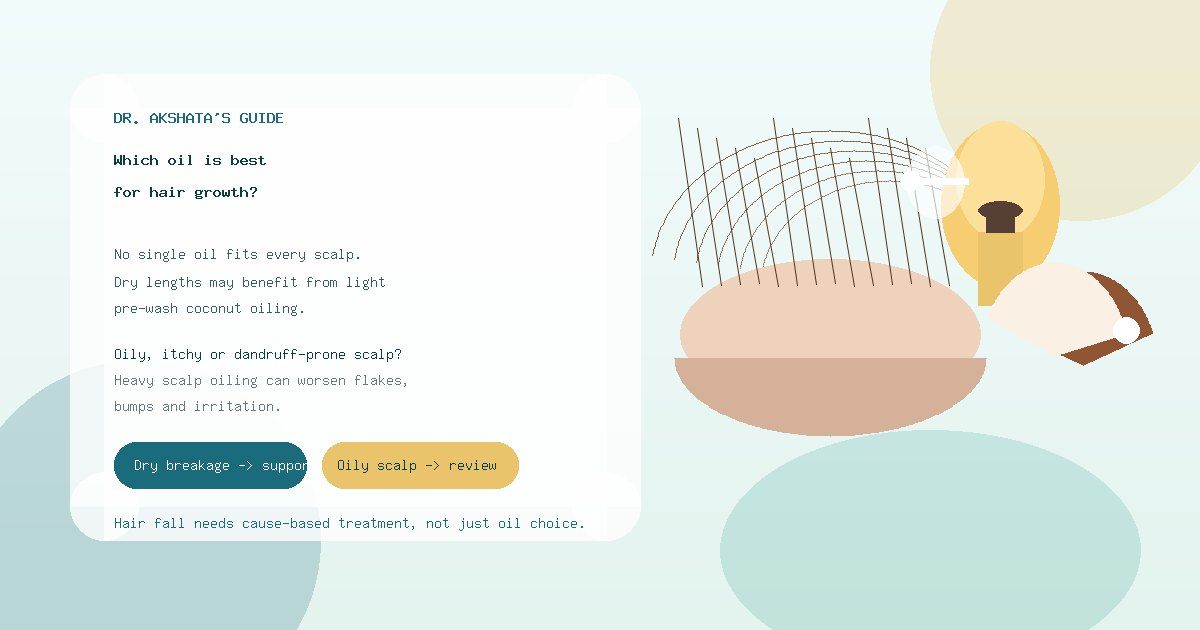
This simple visual helps patients understand when oil is useful, when it should stay only on the hair lengths, and when I advise less scalp oiling.
Dry hair lengths
If the hair feels rough, tangles easily or breaks from the ends, light pre-wash coconut oiling on the lengths can be reasonable.
- Best fit: shaft dryness and breakage
- Apply lightly and wash out
- Do not expect it to fix hormonal thinning
Oily itchy scalp
If the scalp is greasy, itchy or full of flakes, repeated heavy oiling may trap sweat and worsen irritation.
- Best fit: minimal scalp oiling
- Prioritize scalp diagnosis
- Consider dandruff or seborrhoeic pattern
Visible thinning
When the parting is widening, shedding is sudden or patches are appearing, choosing an oil is not enough. The cause needs review.
- Check stress, illness, thyroid, PCOS, iron and B12
- Review medicines and timelines
- Seek earlier help if hair loss is rapid
Common oils patients ask me about
These are routine-care options, not guaranteed hair-growth treatments. The “best” choice depends on scalp type, how often you wash, whether dandruff is present and whether the problem is breakage or true shedding.
Coconut oil
My most practical first option for dry, breakage-prone hair lengths. It may reduce protein loss and wash damage, but it is not a cure for every hair-fall cause.
Almond oil
Often chosen for softer feel and light massage. Better as a comfort oil than as a proven treatment for real thinning.
Sesame oil
Common in traditional oiling routines and massage. Can suit some dry scalps, but heavy use may feel too rich on oily or itchy scalps.
Bhringraj or blended herbal oils
Some patients like them for routine massage, but blends may irritate sensitive scalps if they contain fragrance or many additives.
Castor oil
Very thick and difficult to wash out. I do not usually suggest it on dandruff-prone or acne-prone scalps because residue can be troublesome.
No scalp oiling
Sometimes this is the best advice when dandruff, scalp acne, product reaction or seborrhoeic irritation is the main problem.
Preparing for a consultation
Bring your reports and a list of current medicines. An examination may be needed before advice can be given.
Bring your reports and a list of current medicines. An examination may be needed before advice can be given.
Medicine safety
A website cannot select a medicine, potency or dose for you. Tell your treating clinician about every product you use. Homeopathic products are not a substitute for indicated medical treatment, vaccination or emergency care.
A website cannot select a medicine, potency or dose for you. Tell your treating clinician about every product you use. Homeopathic products are not a substitute for indicated medical treatment, vaccination or emergency care.
Safe oiling tips I usually give
Simple oiling is often better than aggressive routines.
- Use a small amount instead of saturating the scalp
- If your scalp is oily or dandruff-prone, keep oil mostly on the hair lengths
- Wash out oil properly and avoid leaving thick oil on for many days
- Stop a new oil if burning, itching, tiny bumps or increased flakes appear
- Avoid rubbing hard or using nails while massaging
- If hair fall is continuing for weeks, do not rely on oil alone
When oiling should stop and a doctor should review you
Seek review if hair fall is sudden, patchy, painful, associated with pus, severe dandruff, scalp acne, broken hair, fever, major fatigue, postpartum change, thyroid symptoms or a visibly widening parting line. Children and pregnant women need especially careful advice.
Related Pages
Read related consultation guides and health information.
References & Sources
- American Academy of Dermatology. Hair loss overview and common causes. Source →
- American Academy of Dermatology. Hair products can trigger breakouts along the hairline and forehead. Source →
- Ruetsch SB et al. Secondary ion mass spectrometric investigation of penetration of coconut and mineral oils into human hair fibers. J Cosmet Sci. 2001. Source →
- Phong C et al. Coconut, Castor, and Argan Oil for Hair in Skin of Color Patients: A Systematic Review. J Drugs Dermatol. 2022. Source →
- Mayo Clinic. Hair loss symptoms and causes. Source →