



High uric acid and gout are related, but they are not the same. Some people have raised serum urate without joint symptoms, while gout is an inflammatory arthritis caused by urate crystals in or around a joint. A uric-acid number can also be lower during an acute flare, so diagnosis depends on the episode, examination and, when needed, repeat testing, joint-fluid analysis or imaging.
Is this gout consultation right for me?
This consultation is designed for people who need a clear review of recurring joint flares or a high uric-acid result, while keeping necessary medical care visible.
- Useful when
- A painful joint keeps flaring, uric acid remains high, triggers are unclear or the report does not match the symptoms.
- Dr. Akshata checks
- Joint pattern, flare timeline, serum-urate trend, kidney function, medicines, food and alcohol pattern, stones and warning signs.
- Bring with you
- Uric-acid and kidney-function reports, current prescriptions, a flare photo if available and dates of the last three attacks.
Plan your consultation
- Clinic location
- Shop No. 2, Om Shanti Heights, Wagholi Road, Sant Nagar, Lohegaon, Pune 411047.
- Availability and fees
- Ask the clinic for the next available appointment, the consultation fee and any separate medicine or follow-up charges before confirming.
- In person or online
- Tell the clinic whether you want to visit or consult online. Ask whether your concern requires an in-person examination before choosing a slot.
High uric acid is not automatically gout
Uric acid is formed when the body breaks down purines. When serum urate remains above its saturation point, crystals can form. Gout occurs when those crystals trigger inflammation in a joint or nearby tissue. A raised report without a typical joint episode is called asymptomatic hyperuricaemia, not gout.
A classic flare often begins suddenly, frequently overnight, with severe pain, warmth, swelling and marked tenderness. The base of the big toe is common, but ankles, knees, feet, wrists, fingers and elbows can also be affected. Repeated flares can lead to firm urate deposits called tophi and may occur alongside kidney stones.
The number must be read in context. NICE advises repeating serum urate at least two weeks after a flare settles when gout is strongly suspected but the level is below 6 mg/dL during the attack. When diagnosis remains uncertain, joint aspiration or imaging may be considered.
The Uric Acid Result + Joint Pattern Map
One number cannot answer six different clinical questions. Dr. Akshata connects the report to the episode before discussing a plan.
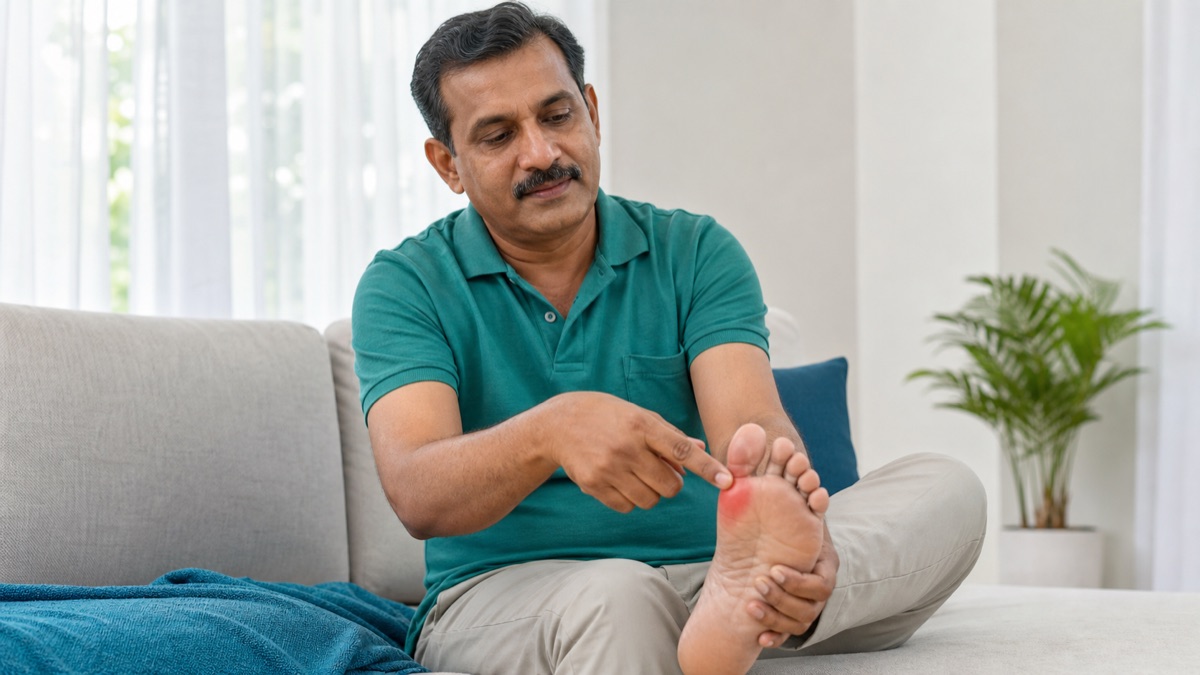
A gout flare can make even light touch around the joint difficult
The image shows a common big-toe pattern, but gout can affect other joints. The exact joint, onset, heat, swelling, recurrence and systemic symptoms are documented rather than assumed from appearance alone.
Common Gout Symptoms and Related Clues
- ✓Sudden severe joint pain that peaks within hours
- ✓Redness, warmth, swelling and extreme tenderness
- ✓Pain at the base of the big toe, ankle, knee, foot, wrist, finger or elbow
- ✓Night-time attacks that disturb sleep
- ✓Lingering soreness or stiffness after the intense phase settles
- ✓Repeated flares separated by symptom-free periods
- ✓Firm nodules or tophi around joints or ears
- ✓Kidney-stone symptoms or a history of urinary stones
Build a 24-Hour Flare Passport
A flare can settle before the appointment. This compact record preserves the clues that are easiest to forget later.
Why can uric acid rise and gout flare?
Gout usually reflects sustained urate exposure plus individual risk factors. A single food is rarely the whole explanation.
- 01 Reduced urate clearance: Kidney function and inherited handling of urate strongly influence the level.
- 02 Medicines and health conditions: Some diuretics, kidney disease, high blood pressure, metabolic conditions and other medicines can alter risk.
- 03 Alcohol and sugary drinks: Beer, spirits and fructose-rich drinks can contribute to flares in susceptible people.
- 04 Dietary purines: Large amounts of organ meat, some red meat and certain seafood may add to the urate load, but diet is not the only driver.
- 05 Rapid body changes: Dehydration, fasting, crash dieting, surgery or acute illness may precede an attack.
- 06 Family tendency: Genetics can influence urate production, kidney clearance and the chance of crystal formation.
Preparing for a consultation
Bring your reports and a list of current medicines. An examination may be needed before advice can be given.
01 Your symptom history
Note when symptoms began, what changed, and how they affect sleep, work or daily activities.
02 Reports and medicines
Bring existing diagnoses, test results and the names of medicines and supplements you use. Do not stop prescribed treatment to attend a consultation.
03 Examination and referral
Ask whether you need an in-person examination, further tests or a referral. Urgent symptoms need timely medical care, not an online appointment.
Track gout attacks alongside the uric-acid trend
The same markers are reviewed each month so short-term relief and longer-term control are not confused.
Flare Count
Number of attacks and symptom-free weeks
Days Affected
Pain, swelling, sleep and work days lost
Joint Function
Footwear, walking, stairs, grip or bending
Urate Trend
Between-flare reports interpreted by the treating clinician
Medicine Record
Prescribed regular and flare medicines kept visible
Kidney + Stones
Kidney reports and any urinary-stone episode
Pune Areas We Serve Gout & High Uric Acid consultation from nearby areas Open local area links
Gout & High Uric Acid consultation from nearby areas
Gout and uric-acid consultations are available at the Lohegaon clinic for nearby Pune areas and online across India.
Gout Care Map at Dr. Akshata's Clinic
The plan connects diagnostic confidence, urgent safety, individualized symptoms and measurable follow-up.
When to Seek Medical Attention
- A hot, swollen joint with fever, chills, sickness or feeling very unwell
- A first severe attack when gout has not been diagnosed
- Rapidly spreading redness, a wound near the joint or recent joint surgery/injection
- Severe pain after injury, inability to bear weight or a visibly deformed joint
- Reduced urine, persistent vomiting, severe flank pain or known kidney disease with acute illness
Keep prescribed medicines, urgent care and specialist follow-up unchanged unless the treating clinician advises otherwise.
Same uric-acid topic, different next decisions
The result, symptoms and current treatment must be read together. This table keeps the pathways distinct.
| Situation | Conventional / specialist care | Homeopathy at Dr. Akshata's clinic | Decision point |
|---|---|---|---|
| Raised uric acid, no joint symptoms | Review repeat result, kidney health, medicines and overall cardiovascular/metabolic context | Consultation can map general health and individual tendencies after the medical context is clear | Do not label the report as gout automatically |
| Typical flare but uric acid below 6 mg/dL during attack | Repeat serum urate at least two weeks after the flare settles if suspicion remains | Record the complete episode while diagnosis is clarified | A during-flare number can be misleading |
| Hot swollen joint with fever or marked illness | Urgent assessment to exclude joint infection | Do not wait for a routine consultation | Safety takes priority |
| Repeated diagnosed gout flares | Treat-to-target urate-lowering strategy and flare plan may be advised | Individualized consultation can track symptom pattern and daily function alongside prescribed care | Keep long-term medicines and target monitoring visible |
| Tophi, kidney stones or kidney impairment | Physician/rheumatology and kidney-aware management | Coordinate the case rather than treating each symptom in isolation | Specialist input may be needed |
How Dr. Akshata Structures the Consultation for Gout & High Uric Acid
After diagnosis and safety screening, Dr. Akshata individualizes the prescription from the exact joint, onset, sensation, heat or cold response, time pattern, food and drink context, sleep and general health. The goal is a structured, monitorable consultation, not a one-remedy answer to a laboratory number.
Joint Pattern
Big toe, ankle, knee, finger or shifting attacks are separated.
Onset + Timing
Sudden night flares and lingering intervals are documented.
Sensitivity
Heat, cold, pressure, touch and movement responses are compared.
Whole Context
Reports, kidneys, medicines, hydration and recurrence are kept together.
What to Expect During Treatment
The first consultation reviews the joint history, uric-acid trend, kidney reports, medicines, food and alcohol pattern, hydration, stones, other health conditions and urgent warning signs.
Follow-up uses the Gout Control Dashboard. Prescribed anti-inflammatory or urate-lowering care is not changed by the website or without coordination with the treating clinician.
Medicine safety
A website cannot select a medicine, potency or dose for you. Tell your treating clinician about every product you use. Homeopathic products are not a substitute for indicated medical treatment, vaccination or emergency care.
Need clarity on a gout flare or uric-acid report?
Book an in-clinic or online consultation with Dr. Akshata. Keep your reports, medicine list, flare dates and a clear joint photo ready.
Diet & Lifestyle Guidance for Gout & High Uric Acid
Food choices can influence urate exposure and flare risk, but an extreme “zero-purine diet” is neither realistic nor a complete treatment plan. Advice should fit kidney health, weight, diabetes, medicines and the treating clinician’s plan.
✓ Helpful Habits
- Drink fluids regularly unless a clinician has restricted them
- Keep a simple flare-and-food diary instead of blaming one meal
- Work toward gradual, sustainable weight change when advised
- Discuss alcohol, sugary drinks and fasting honestly
- Continue clinician-ordered urate and kidney monitoring
✗ Habits to Reduce
- Do not crash diet or fast to lower uric acid
- Do not stop all protein without qualified dietary advice
- Do not stop prescribed allopurinol, febuxostat or other medicine on your own
- Do not assume every painful joint is caused by uric acid
- Do not wait at home with fever and a hot swollen joint
Trusted Sources Used for This Guide
This page uses reputable medical references for symptoms, diagnosis, safety notes, and patient education.
Common Patient Questions Gout & High Uric Acid Patient Questions About Care Open quick consultation answers
Gout & High Uric Acid Patient Questions About Care
These answers cover the separate decisions patients often make before booking.
Is high uric acid the same as gout?
No. High uric acid is a blood-test finding. Gout is an inflammatory arthritis caused by urate crystals. Some people have high uric acid without gout, and diagnosis should not be made from one result alone.
Can uric acid be normal during a gout flare?
Yes. NICE advises repeating serum urate at least two weeks after the flare settles when gout is strongly suspected but the level is below 6 mg/dL during the attack.
What should I record during an attack?
Record the joint, start time, time to peak pain, heat, redness, swelling, fever or sickness, medicines taken, and a clear photo if possible.
Can gout consultation start online?
Report review, flare mapping and follow-up planning can start online. A first severe hot joint, fever, marked illness, injury or suspected infection needs appropriate in-person or urgent assessment.
What makes this consultation condition-specific?
The consultation links uric-acid timing, exact joint pattern, kidney and stone history, current medicines, flare burden and function instead of selecting a remedy from the report value.