Quick answer
Foods can help prevent or reduce hair fall when the trigger is low protein, low iron, B12 deficiency, vitamin D deficiency, crash dieting, poor appetite or weak recovery after illness. But diet alone cannot fix every case. Sudden shedding, patchy hair loss, scalp infection, PCOS, thyroid imbalance or hereditary thinning needs proper consultation and report review.
In my clinic, many hair fall patients have already changed shampoo and oil, but their meal pattern is still weak. Some skip breakfast, some eat very little protein, some follow crash diets, and many vegetarian patients have never checked ferritin or B12.
Food is not a magic hair-growth shortcut, but it gives the hair follicle building blocks. I usually look at diet, digestion, sleep, stress, periods, thyroid history, recent fever, weight loss, dandruff and reports together before saying what to eat.
How food affects hair fall
Hair is protein-rich tissue, so the body needs steady protein, iron, B vitamins, zinc, vitamin D, healthy fats and enough calories. When the body is underfed or recovering from illness, hair can shift into a shedding phase. This is why hair fall often appears two to three months after fever, stress, dieting, delivery or major lifestyle change.
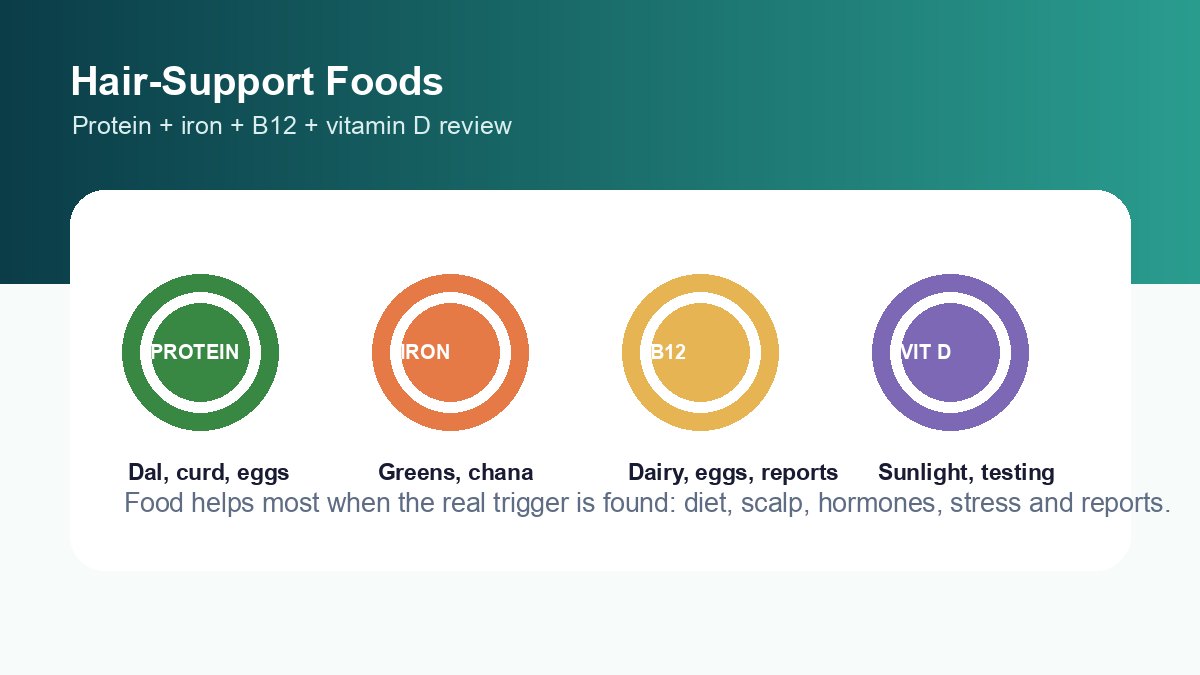
Hair-support plate map
I explain diet with a simple plate map so patients do not depend on random supplements.
A practical hair-support plate
This is not a rigid diet chart. It is a simple way to check whether daily meals are giving the scalp enough support.
Protein at each meal
Dal, sprouts, paneer, curd, eggs, fish, chicken, soy, chana or nuts can support hair shaft strength when intake is low.
- Aim for consistency
- Do not crash diet
- Review digestion if appetite is poor
Iron and folate foods
Leafy greens, chana, rajma, dates, sesame, jaggery in moderation, eggs and meat can help, but low ferritin may still need medical correction.
- Pair with vitamin C
- Tea/coffee can reduce iron absorption
- Check reports if fatigue is present
B12 and vitamin D review
Vegetarian diets may be low in B12, and indoor routines can affect vitamin D. Reports matter more than guessing.
- Milk/curd/paneer may not be enough for all
- Supplements only when indicated
- Correct deficiency safely
Foods I commonly discuss for hair fall
The best foods depend on the patient, but these groups come up often in consultation.
Dal, sprouts and chana
Helpful vegetarian protein options, especially when meals are mostly rice, poha, bread or snacks.
Curd, paneer and milk
Useful for protein and B12 support in some vegetarian patients, though confirmed B12 deficiency may still need replacement.
Eggs, fish or chicken
Good protein and micronutrient sources for patients who eat non-vegetarian food.
Leafy greens and legumes
Support iron, folate and minerals, especially when paired with lemon, amla or other vitamin C foods.
Nuts and seeds
Almonds, walnuts, sesame, pumpkin seeds or peanuts can support healthy fats and minerals in small portions.
Fruits rich in vitamin C
Amla, guava, citrus fruits and berries can support iron absorption and overall antioxidant intake.
Preparing for a consultation
Bring your reports and a list of current medicines. An examination may be needed before advice can be given.
Bring your reports and a list of current medicines. An examination may be needed before advice can be given.
Limits of homeopathy in nutrition-linked hair fall
Evidence does not establish homeopathy as a treatment for hair loss. Protein, iron, B12 or vitamin D deficiency must be corrected, and scalp or hormonal causes need appropriate care.
Common food mistakes I see in hair fall patients
Many patients do not need a complicated diet; they need consistency.
- Skipping breakfast and then relying on tea, biscuits or snacks
- Very low protein vegetarian meals for months
- Crash dieting or fasting after sudden weight gain
- Taking hair supplements without checking ferritin, B12 or vitamin D
- Over-oiling the scalp while ignoring dandruff or scalp acne
- Stopping prescribed deficiency correction too early
When food changes are not enough
Consult soon if hair fall is patchy, sudden, painful, associated with pus, scaling, severe dandruff, rapid widening of the parting, heavy periods, major fatigue, thyroid symptoms, PCOS signs, postpartum shedding, fever history or unexplained weight loss. Children, pregnant women and patients with autoimmune disease need careful review.
Related Pages
Read related consultation guides and health information.
References & Sources
- American Academy of Dermatology. Hair loss causes and shedding triggers. Source →
- Mayo Clinic. Hair loss symptoms and causes. Source →
- MedlinePlus. Hair loss health topic. Source →
- National Institutes of Health Office of Dietary Supplements. Vitamin B12 fact sheet. Source →
- National Institutes of Health Office of Dietary Supplements. Iron fact sheet. Source →